



The Trump administration has issued a directive that could make it more difficult for foreigners with certain medical conditions or lack of financial resources to visit or live in the United States. This is part of a wider immigration crackdown from the administration, aiming to reduce the burden on U.S. taxpayers.
The directive was issued in a cable from the State Department, which was obtained by The Associated Press. It orders embassy and consulate officials to comprehensively scrutinize visa applicants, ensuring that they will not rely on public assistance from the U.S. government after their admission.
This interpretation of the public charge rule could result in substantial limitations on immigration. The Trump administration had already expanded the list of benefits that could disqualify applicants, and these new guidelines seem to broaden that scope even further.
Applicants currently undergo medical exams and are screened for communicable diseases and other health issues. They are also required to be vaccinated. The new directive introduces more detailed requirements. Consular officers must consider the applicant’s age, health, family status, financial situation, education, skills, and past use of public assistance, among other factors.
Medical conditions that could lead to visa refusal include chronic conditions, obesity, high blood pressure, cardiovascular, metabolic and neurological diseases, depression, anxiety and other mental health conditions. The officials are also expected to review applicants’ English proficiency and can do so by conducting interviews in English.
The directive has raised concerns among immigration policy experts. They warn that it could negatively impact older adults and people with low incomes and reduce the number of immigrant and non-immigrant visas granted. The policy could also affect family members of people already living in the U.S. who would like to come to visit or live with them.
However, U.S officials say that the directive primarily affects those outside of the U.S or those seeking to renew their visas. They affirm that the change does not apply to non-immigrant visas known as B-2s, which allows for short-term stays including personal visits and medical treatment.
Ultimately, the interpretation of these guidelines is up to the consular officers. But some experts point out that this signals a significant shift in messaging, from viewing visa applications favorably to scrutinizing them in depth to find reasons for denial.
Summary
1. A new manual release revises the policies for state-funded medical benefits programs for survivors of violence and asylum applicants. Eligibility criteria for the programs Victims of Trafficking, Torture or Other Serious Crimes (VTTC) and Asylum Applicants and Torture Victims (AATV) are detailed. Noncitizens who do not meet federal Medicaid qualifications may still qualify for state-funded health benefits or other programs provided they meet certain criteria. Changes have also been made on how noncitizen applications are processed, rights for derivative family members, and the definition of state-funded medical coverage versus federal Medicaid.
2. The US State Department resumed processing F, M, and J visas for Harvard University students and exchange visitors following a recent court order. The parole and work authorisation for migrants from Cuba, Haiti, Nicaragua, and Venezuela under the CHNV parole programs have been terminated in accordance with a US Supreme Court ruling. The validity of medical exams for Green Card applications has been updated. Homeland Security has revealed a new self-deportation app that offers fine waivers to undocumented immigrants who leave the US voluntarily. July 2025 Visa Bulletin has been released, showing some advancements in employment and family-based categories. Further adjustments in immigration policies have been made in various key industries. Department of State has decided to screen the online presence of all new and returning student visa applicants.
The Trump administration has announced immediate changes to green card applications, citing potential threats to public health from the previous policy. The US Citizenship and Immigration Services (USCIS) is now requiring applicants for permanent residency to provide a renewed medical examination form; previously, applicants could use forms indefinitely.
This change could affect immigrants applying for an adjustment of status, who were previously allowed to use a form signed by a civil surgeon until June 10. Usually, changes to application processes are given some lead time to allow applicants and immigration attorneys to prepare. The form in question is the I-693, known as the “Report of Immigration Medical Examination and Vaccination Record”. This is completed by a US-based immigrant applying for an adjustment of status or to become a permanent resident. Under the new guidance, if an application is withdrawn, the I-693 form is invalidated and cannot be reused, requiring the applicant to retake the examination.
The move is likely to impact thousands of applicants currently filing for adjustment of status, known as Form I-485. Medical exams, similar to physical exams, require checks for specific conditions or diseases that could render a person inadmissible to the U.S. The exam can cost between $100 and $500, potentially resulting in immigrants having to pay twice for the procedure.
In March, USCIS’s abrupt changes to numerous application forms led to mass confusion among applicants, resulting in a lawsuit which forced USCIS to provide at least two weeks’ notice prior to rule changes taking effect. The Trump administration’s increasingly tough stance on immigration enforcement has garnered attention, particularly their revoking of green cards belonging to those deemed to have broken immigration or other laws.
In contrast, the October 2025 Visa Bulletin has been released, marking the start of the new fiscal year and potential movement in green card queues for those waiting for their employment-based green card. The bulletin provides guidance for two groups: those whose priority date has only just become current, thus enabling submission of their I-485, and those whose I-485 is pending and whose priority date is due to become current. The visa bulletin sets the pace for green card processing, with two charts governing eligibility to file depending on priority dates.
Finally, an article by Steven A. Brown, Partner at law firm Reddy Neumann Brown PC, offers detailed advice on how to navigate the intricacies of the I-485 filing process and the potential pitfalls to avoid. This ranges from gathering key evidence and filling out supplementary forms to preparing for any contingencies and knowing when to escalate case management.
The U.S. Citizenship and Immigration Services (USCIS) has released a policy memorandum in August 2025, indicating an updated approach in evaluating the “good moral character” of immigrants pursuing citizenship. Where previous assessments mainly considered the absence of criminal activities, the new policy states it will now make a “holistic assessment of an alien’s behavior, adherence to societal norms, and positive contributions.” On top of community participation, education, stable employment history, and financial responsibility amongst other factors, a lack thereof or criminal acts such as drug use or unlawful voting may lead to disqualification. Critics have highlighted potential inconsistencies in application due to the subjective nature of these evaluations.
Meanwhile, the Trump administration reversed a policy just put into place last year surrounding green cards. Effective June 11, 2025, all new permanent residency applications, as well as pending ones, will require a renewed medical examination form. Medical exams, which may cost hundreds of dollars, check for conditions that might prevent admissibility into the U.S. Previously, medical examination forms had no expiry date. However, under the new rule, these forms will no longer be valid should a residency application be denied or withdrawn, meaning the applicant would need to undertake (and pay for) the medical exam again should they reapply.
In addition, President Trump announced a “gold card” initiative through a new website where potential immigrants can show interest in purchasing a green card for $5 million. This seems to be a part of President Trump’s plan of substituting the EB-5 visas that offer green cards to those who invest in the U.S., a plan he announced in February. While Trump claims this initiative could potentially rake in a staggering $50 trillion, sufficient to cover the national debt, the existing data implies a more conservative figure, between $25 billion to $40 billion. As per legal analysts, any changes to the EB-5 visa program would need congressional approval. Until that comes through, the proposed “gold card” scheme may operate alongside the existing EB-5 program.
Sources:
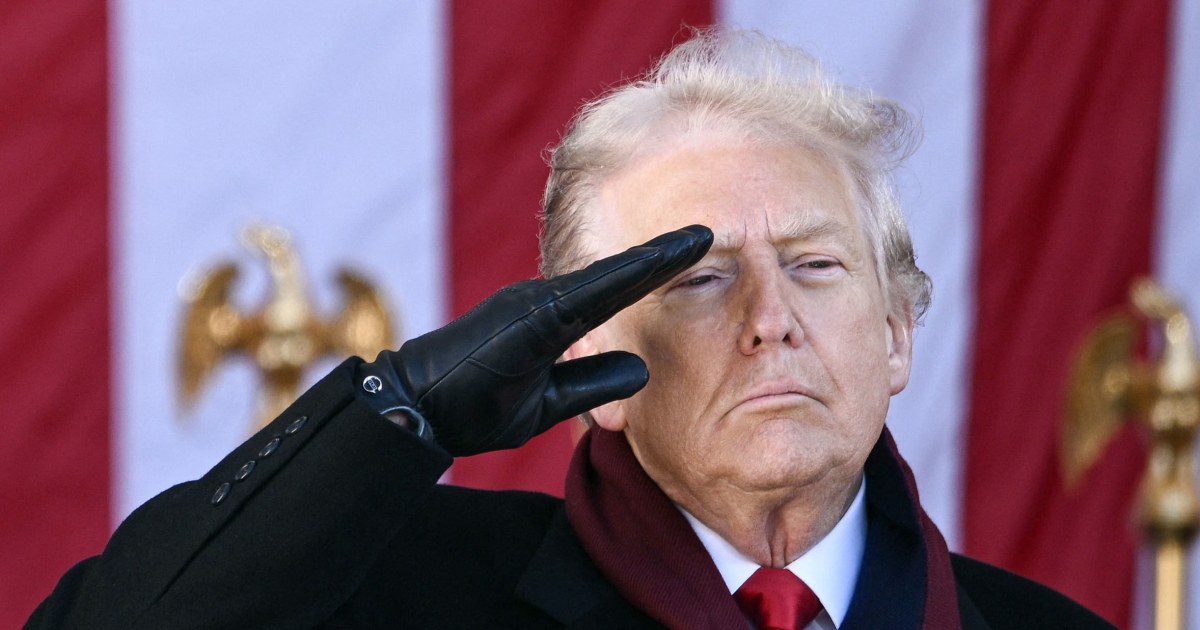 New Trump directive could deny more visas based on health conditions, finances
 WR Immigration News Digest
 Trump Admin Makes Green Card Change ‘Effective Immediately’
 October 2025 Visa Bulletin Released: Important Actions to Take
 USCIS Updates Policy on Assessing Good Moral Character in Adjudication of Naturalization Applications
 Trump admin changes requirements for green cards ‘effective immediately’