



The Trump administration has issued new guidelines that could potentially deny visas to foreigners who have certain medical conditions like diabetes, obesity, cardiovascular diseases, respiratory diseases, cancers, metabolic diseases, neurological diseases, and mental health conditions under the justification that they could become a potential drain on U.S. resources. This directive, issued from the State Department to embassy and consular officials, greatly expands the list of medical conditions to be considered during visa application and grants more decision-making power to visa officers. Experts claim this recent move signifies part of the ongoing White House campaign to push out immigrants living without authorization in the U.S. and dissuade others from immigrating into the country.
These Technical Instructions issued by Centers for Disease Control and Prevention are to be followed by panel physicians when evaluating immigrants and refugees for U.S. visa applications. The instructions focus on identifying physical or mental disorders with potential harmful behaviors and substance use disorders to classify an applicant as inadmissible (Class A). Key terms are defined such as ‘harmful behavior’, ‘mental disorders’, and ‘drug abuse’.
The screening process involves a psychiatric evaluation for each applicant, with diagnoses falling into four main categories: No Class A or Class B Classification, Class A Classification, Class B Classification, and Waivers. Substance use disorder involving a CSA substance can result in an applicant receiving a Class A Classification. An applicant with a diagnosis indicating a substance use disorder involving a non-CSA substance must also be assessed for associated harmful behavior. Any associated behavior deemed dangerous qualifies the applicant as Class A, whereas harmless behavior results in a Class B status. Inadmissible applicants can petition for a Class A waiver, but immigrant visa applicants diagnosed with CSA substance use disorders aren’t eligible for a waiver. Waiver requests are reviewed by CDC’s DGMH but only USCIS has the final authority to adjudicate the request.
1. New US Visa Guidelines: People With Chronic Diseases Might be Denied Entry
The Trump administration has issued new visa guidelines potentially impacting immigrants with chronic illnesses. Under the new guidelines, US consular officers must scrutinize long-term health requirements of visa applicants, possibly denying those who may require ongoing expensive medical care in the US. The cable expands on the existing ‘public charge’ rule used to reject applicants who may depend on government benefits. Non-communicable issues such as diabetes, obesity, cardiovascular and metabolic disorders, neurological issues, certain types of cancer, and mental health conditions are to be closely assessed by officers as they can necessitate expensive, long-term care. Immigration attorneys argue that these new measures offer individual officers greater discretion to speculate whether a person’s health condition could result in future financial strain, potentially leading to inconsistent or speculative decisions. Applicants must provide evidence of their ability to afford their treatment privately, without accessing US public benefits.
2. October 2025 Visa Bulletin: What Actions to Take
The October 2025 Visa Bulletin has now been released, beginning the new fiscal year and potentially advancing the processing of green cards. Two groups of individuals may be impacted:
Group 1: Those eligible to submit their Adjustment of Status (I-485) under the “Dates for Filing” chart, as their priority dates have become current. Individuals in this group should gather their immigrant petition approvals and civil documents, get their medical exams done, and ensure forms like Form I-485J and applications for work and travel permits are submitted promptly.
Group 2: Those whose I-485 applications are already under review and are now eligible for final approval as their priority date has come under the “Final Action Dates” chart. These individuals should consider delay litigation, proactive medical exam updates, confirm job offers with USCIS, or even request to shift their pending I-485 applications to an alternative, faster category. They should respond swiftly to USCIS requests for documentation or information, and ensure their address and communications with USCIS are promptly updated.
Advice for high-skilled immigrants and employers navigating these new regulations includes monitoring the visa bulletin monthly, acting quickly when dates become current, and staying prepared for medical checks, birth validations, potential litigation, and other administrative details.
The Trump administration has issued a change to the application process for obtaining a Green Card, which adjusts the status of immigrants to permanent residents in the U.S. This change, made by the United States Citizenship and Immigration Services (USCIS), came into effect immediately and mandates each new application to include a renewed medical examination form called Form I-693. Previously, immigrants were allowed to use these forms indefinitely.
This shift in policy could affect immigrants who are currently applying for an adjustment of status, as they were permitted to use previously signed forms until June 10, 2025. Typically, when there are changes made to application processes, a grace period is granted for applicants and immigration attorneys.
The I-693 form, officially known as the “Report of Immigration Medical Examination and Vaccination Record,” is completed by immigrants applying for an adjustment of status or to become a permanent resident in the U.S. Previously, the USCIS policy stated that any I-693 form completed and signed by a civil surgeon on or after November 1, 2023, could be used indefinitely, including those who withdrew their applications or applied for a different benefit.
However, with the USCIS’s new guidance, effective from June 11, 2025, in cases where a Green Card application is withdrawn, the I-693 is invalidated. Therefore, the candidate must retake the medical examination to acquire a fresh, signed copy of the form.
These changes will likely impact thousands of applicants looking to file for an adjustment of status application or Form I-485. Medical exams, similar to physical examinations, check for specific conditions or diseases that could deem an individual inadmissible to the U.S. These exams may cost between $100 and $500 implying that immigrants may have to pay this fee more than once.
The USCIS also has enforced this obligation on every Green Card applicant and any other immigrant applying for different visas, if deemed necessary. The enforcement of these rules occurs amidst heightened scrutiny of immigrants as they apply for temporary and permanent visas in the U.S. It is a part of the Trump administration’s initiative to crack down on those violating immigration laws.
Notably, even Green Card holders aren’t exempt from this scrutiny. The government has detained Green Card holders whom they perceived as having broken immigration or other laws despite their permanent resident status. It has been emphasized that while Green Cards offer permanent residency, they do not equate to citizenship and can be revoked on grounds such as national security, immigration law violations, or criminal convictions.
Effective from June 11, 2025, the new policy mandates a revamped version of the medical examination form starting from July 3, 2025. Meanwhile, the Trump administration unveiled a new website for registering interest in a “gold card.” This card enables successful applicants to purchase a Green Card for $5 million. Trump estimates that sales of this “gold card” could raise up to $50 trillion, relieving national debt, although existing data contradicts this, estimating a $25 billion to $40 billion increase. Legal experts claim that the abolition or amendment of the existing EB-5 visa program granting Green Cards to U.S. investors can only be enacted with congressional approval, suggesting the potential for this new “Gold Card” program to coexist with the current EB-5.
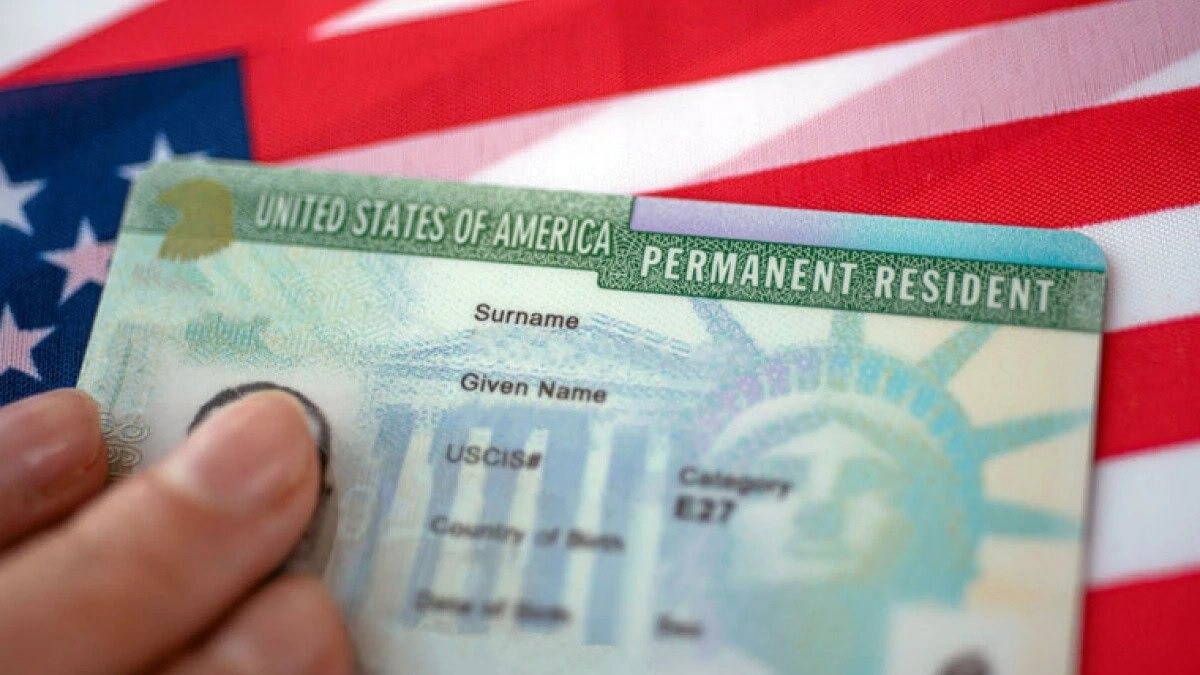
The U.S. Citizenship and Immigration Services (USCIS) has altered its guidelines on Form I-693, a mandatory document for demonstrating health-related eligibility for Green Card applications. As per the new update, the “Report of Immigration Medical Examination and Vaccination Record” – which is formally signed off by a civil surgeon – is only valid while the Green Card application it supports is still being reviewed. If the application is withdrawn or denied, the I-693 form becomes void and can’t be reused. This policy immediately applies to applications pending or submitted after June 11, 2025.
Previously, the USCIS had a more lenient policy as of April 4, 2024, which allowed an I-693 form to be valid indefinitely. However, the agency has since revised its stance, citing public health threats. The new rule insists on up-to-date medical examinations and treatments for immigrants.
Furthermore, guidelines relating to the documentation of COVID-19 vaccination for adjustment-of-status applicants have been clarified. The USCIS followed the CDC’s March 11, 2025 directive, exempting the COVID-19 vaccination from the list of immunizations deemed mandatory. Until the I-693 form is modified to accommodate these changes, civil surgeons are advised to mark the COVID-19 section as “N/A.” If applicants meet all other vaccination requirements, the report may indicate that the “Applicant completed vaccination requirements.”
This significant shift underlines the systemic tightening situation for those pursuing permanent US residency. The process now may demand two or more complete medical examinations if the initial application is denied, introducing additional time and financial burdens on applicants. The removal of COVID-19 vaccination from the list of required immunizations for Green Card hopefuls, however, will potentially ease some process complexity for those in the pipeline.
Sources:
 Immigrants With Health Conditions May Be Denied Visas Under New Trump Administration Guidance
 New US visa guidance: Immigrants with chronic illnesses could be denied entry | Hindustan Times
 October 2025 Visa Bulletin Released: Important Actions to Take
 Trump Admin Makes Green Card Change ‘Effective Immediately’
 Trump admin changes requirements for green cards ‘effective immediately’
 Major change for Green Card applicants: USCIS says old medical reports can’t be reused after a denial, details here